Thank you for visiting Hydean Dental.
Top 150 Invisalign provider globally
6 Things You Must Know Before You Get Composite Bonding
Practice of The Year Winner + Over 740 verified 5 star Google Reviews


Hey, I'm Dr Ventsi!
A Dental Surgeon here at Hydean, specialising in composite bonding.
Whether you come to us for your treatment, or go elsewhere, we want to make sure you have all the information you need.
That's why I have created this list of the 6 things you must know before you go ahead with your treatment.
What are the different types of bonding?
Before we get into the list, lets first touch on the different types on bonding you have available to you.
Edge Bonding
This is where bonding is simply placed on the edges of the teeth. We rebuild the edges to restore symmetry and softness

Gaps Bonding (diastema bonding)
This is where we close small gaps between teeth instead of using braces to move your teeth.
Shape and Contour Enhancement
We can use bonding to reshape your teeth and design your smile. Making teeth even and smooth.
Colour Correction
This is where we close small gaps between teeth instead of using braces to move your teeth.
Now, lets get into the list...
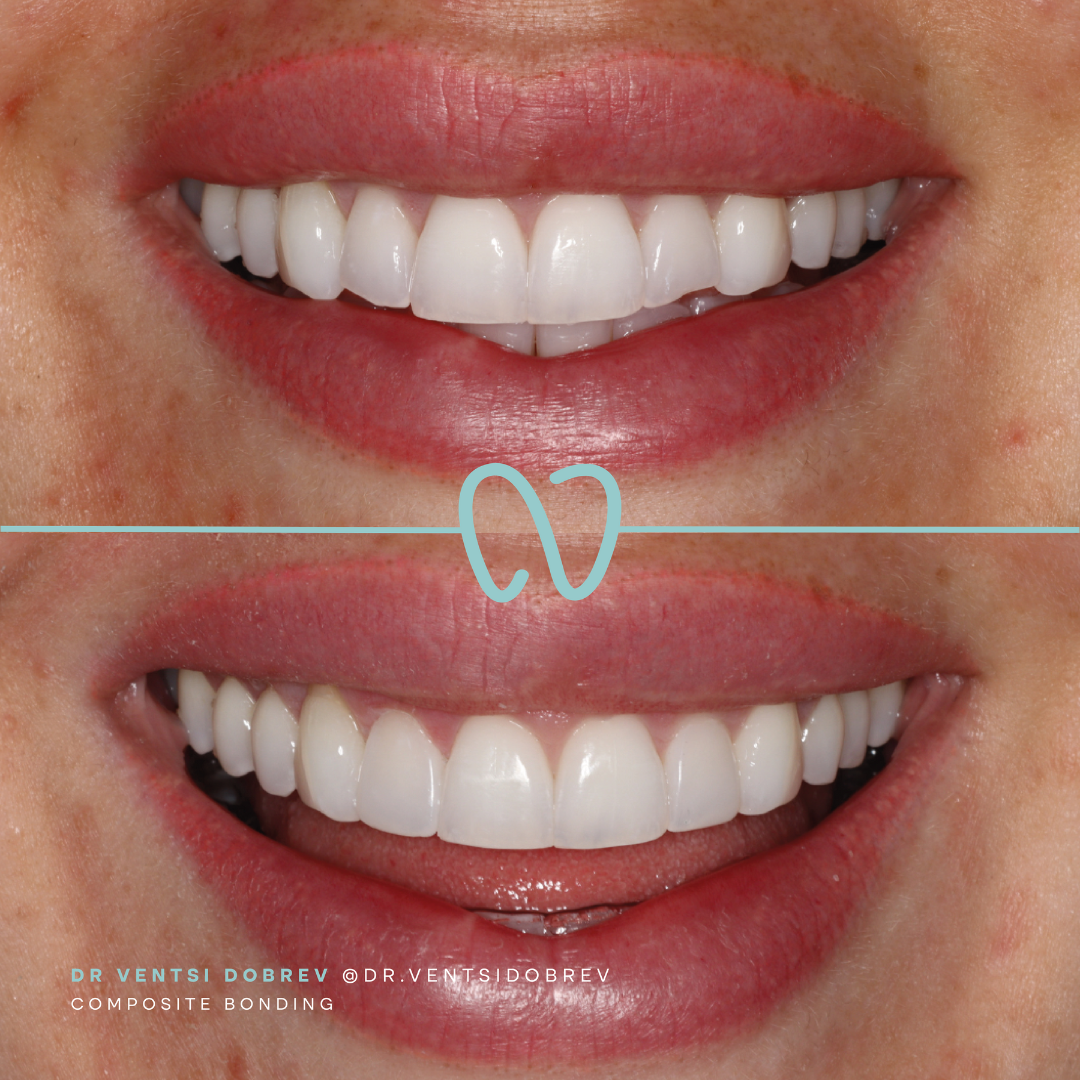
1. The Importance Of Colour Matching
It is very important that the first thing you do, before undergoing any bonding, is whiten your teeth to a shade you're happy with.
Teeth whitening products WILL NOT work on composite bonding. So, when bonding is applied to your teeth, they cannot be whitened.
Composite bonding comes in all shades of white so it is the job of your dentist to ensure they colour match so you can't see the difference between the bonding and your teeth.
P.S. To create a natural looking smile, your teeth should not be whiter than the whites of your eyes.

Image showing the colour match.
2. Shape Matters
Composite bonding is an art. It is hand crafted and therefore heavily dependent on the dentists, experience, skill and aesthetic eye.
Therefore it is important to agree with your dentist on the desired shape your hoping to create.
Do you want a more rounded tooth?
Do you want a bigger smile?
Do you want to close gaps?
Your dentist should consult with you and advise on what's best for your mouth and face shape. Giving you the freedom to decide.
Ideally the photo of the different types of bonding you can have, for example, Hollywood etc
3. Composite Bonding Is Not Indestructible
While composite bonding is very durable. It's not bulletproof.
You should take care of your bonding as it can chip or crack.
Try to avoid things like;
- nail biting
- chewing ice
- or using your teeth to open packaging.
4. They Can Stain Over Time
Composite can absorb pigments over time. Coffee, tea, red wine, smoking, and dark sauces can slowly dull the brightness.
I'd never suggest to avoid all food and drink with colouring, but you can take precautions by drinking through a straw and taking extra care when brushing and flossing.
5. Maintenance Is Unavoidable
Sadly, composite doesn't last forever. Typically it last anything from 5-7 years depending on the type of bonding you have, and how well you take care of them.
It may need polishing, repair, or replacement over time.
Your dentist should be able to give you more information on this before you go ahead.

6. It Is Reversible (within reason)
One of bonding’s biggest advantages is flexibility. Because we preserve so much natural tooth structure, adjustments or removal are usually possible.
Why is this good to know?
If you're not happy with your results, they can usually be rectified by your dentist, or someone else.
If you have any photos of your customers smiling
This is where we plan on adding your VSL.

Facebook
Instagram
Youtube